
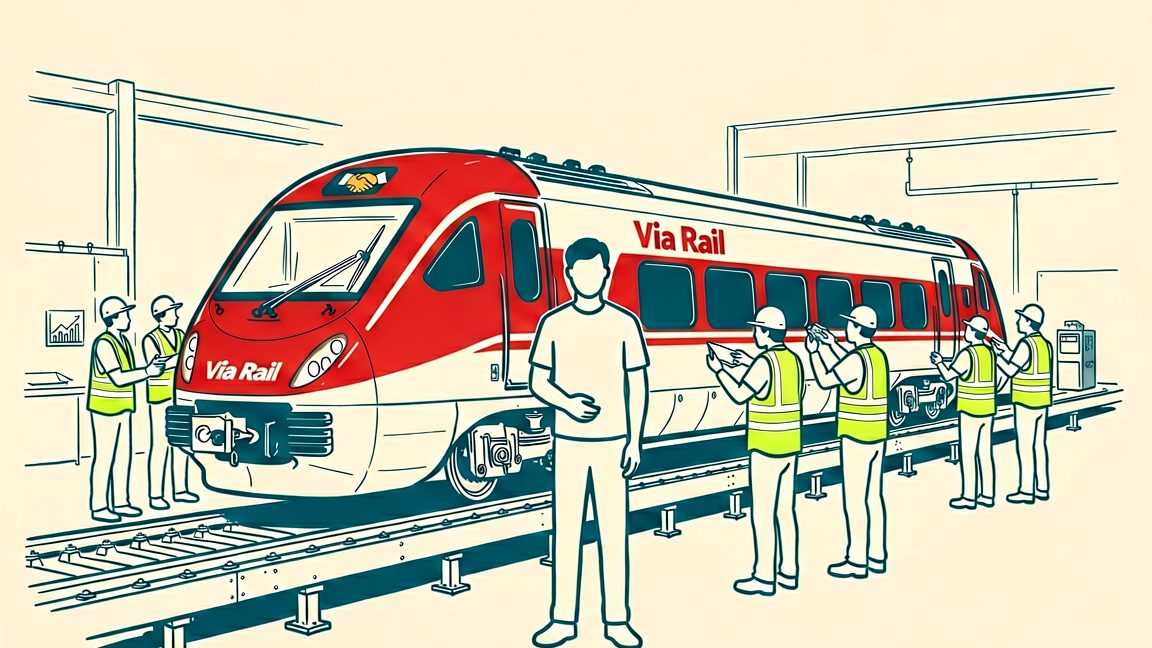
Prime Minister Mark Carney announced on 3 September 2026 that the federal government is spending more than CAD 4.7 billion to acquire and maintain 313 new Via Rail passenger cars from Alstom Canada. The announcement, made at the Alstom plant in Thunder Bay, is part of the government’s renewed “Buy Canadian” policy and represents the first time in four decades that a Via Rail fleet will be built entirely on Canadian soil.
Contract details and timeline
The contract, which runs from 2026 to 2029, covers the full lifecycle of the new cars – from design and engineering to manufacturing, assembly and long‑term maintenance. The CBC Politics report confirms the contract value of CAD 4.7 billion and the total of 313 cars. The announcement was timed to coincide with the government’s broader push to source more infrastructure projects domestically, a strategy that aims to keep spending within Canada and stimulate local supply chains.
Domestic manufacturing and job creation
All of the new cars will be manufactured and assembled in two Canadian locations: Thunder Bay, Ontario and La Pocatière, Quebec. Design and engineering work will take place in Saint‑Bruno‑de‑Montarville, Quebec. By keeping the entire production chain within Canada, the project is expected to support “nearly 700 jobs” across the two provinces, according to the same CBC source. These jobs span a range of trades – from electricians and machinists to welders and assembly line workers – reflecting the breadth of skills required to build modern high‑speed passenger rail equipment.
Projected economic impact
The government’s own impact assessment, cited by CBC Politics, projects that the programme will generate more than CAD 1.6 billion for the Canadian economy. The figure includes direct spending on components, indirect effects on suppliers, and induced impacts from wages paid to workers who will spend their earnings locally. While the exact breakdown is not disclosed, the estimate underscores the multiplier effect of large‑scale manufacturing projects in regions that have traditionally relied on resource extraction or service‑sector jobs.
Alstom Canada’s role and background
Alstom Canada, the Canadian subsidiary of the French multinational Alstom, is the contract holder. The company is listed under the legal name ALSTOM with ticker AOMFF and CIK 1062066, as recorded in the U.S. SEC database. Its SIC description is “Motors & Generators”, reflecting its core expertise in rail‑related propulsion and rolling‑stock technology. While the packet does not provide a headcount or a named chief executive, the SEC filing confirms the corporate identity and its eligibility to receive federal contracts of this magnitude.
Why the domestic build matters
Canada’s existing Via Rail fleet was largely sourced from the United States, meaning that previous procurement cycles sent a substantial portion of the spend abroad. By shifting to a fully Canadian supply chain, the government hopes to retain more of the value‑added work domestically. The CBC article notes that “they’ll be Canadian electricians that install the wiring, Canadian machinists that will make the precision parts, Canadian welders will build the steel frames”. This localisation is intended to develop a skilled workforce that can support future rail projects, including potential high‑speed corridors under discussion in several provinces.
Regional implications for Ontario and Quebec
Thunder Bay’s economy, traditionally anchored by forestry and shipping, will see a boost from the manufacturing footprint of the new cars. Similarly, La Pocatière and Saint‑Bruno‑de‑Montarville will benefit from the assembly and engineering activities. The projected 700 jobs are spread across both provinces, though the packet does not break down the exact distribution. For local communities, the influx of high‑skill positions could translate into higher average wages, increased demand for housing, and a modest uplift in ancillary services such as catering and logistics.
What remains unknown
The CBC source does not disclose the timeline for the first car to enter service, nor does it specify the annual spending schedule within the 2026‑2029 contract period. Details on the procurement’s financing – whether the spend is fully funded from the federal budget or includes provincial co‑funding – are also absent. Finally, the packet does not provide a breakdown of the projected economic benefit, leaving the exact composition of the CAD 1.6 billion impact open to interpretation.
Key metrics of the Via Rail car programme
| Metric | Value | Unit |
|---|---|---|
| Contract value | 4.7 | billion CAD (2026‑2029) |
| Number of cars | 313 | cars |
| Projected economic impact | 1.6 | billion CAD |
| Projected jobs | ≈700 | jobs (approx.) |
Source: CBC Politics – https://www.cbc.ca/news/canada/thunder-bay/mark-carney-via-rail-cars-9.7331310
Looking ahead
With the contract now signed, the next steps involve ramping up production at the Thunder Bay and La Pocatière facilities, finalising engineering designs in Saint‑Bruno‑de‑Montarville, and coordinating with Via Rail on maintenance schedules. Stakeholders will be watching for the first delivery dates, which will signal how quickly the new fleet can replace aging equipment and potentially improve service frequency on key corridors. The government has not indicated whether additional funding will be earmarked for related infrastructure upgrades, such as track renewal or station enhancements, leaving that question open for future reporting.
In sum, the $4.7 billion investment marks a significant shift toward domestic production in Canada’s rail sector, with the promise of a $1.6 billion economic boost and roughly 700 new jobs. How the programme translates into tangible service improvements for passengers and long‑term benefits for the Ontario and Quebec labour markets will become clearer as the project moves from announcement to execution.